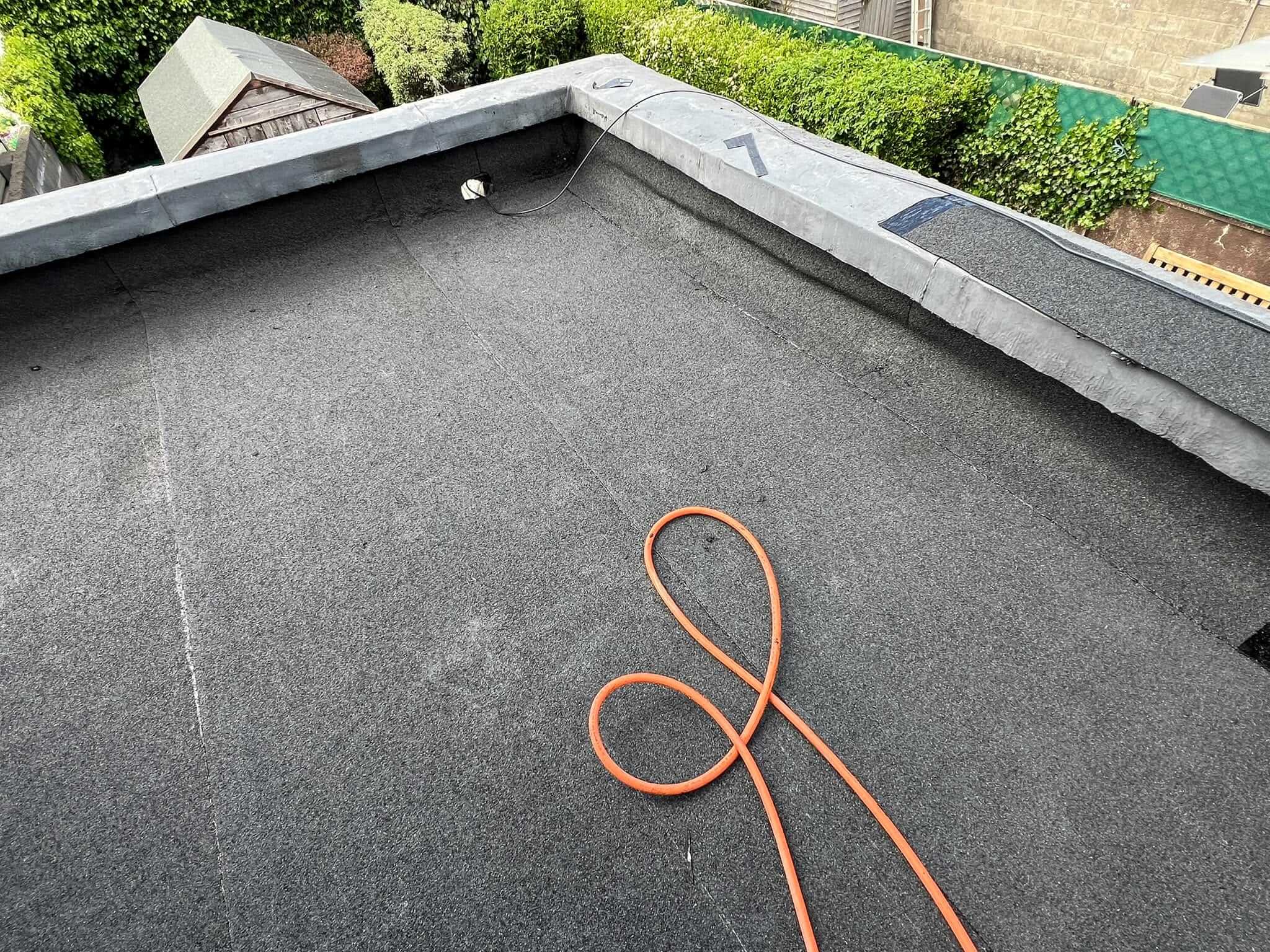
Chimney Repairs Dublin — Repointing, Rebuilds & Leadwork
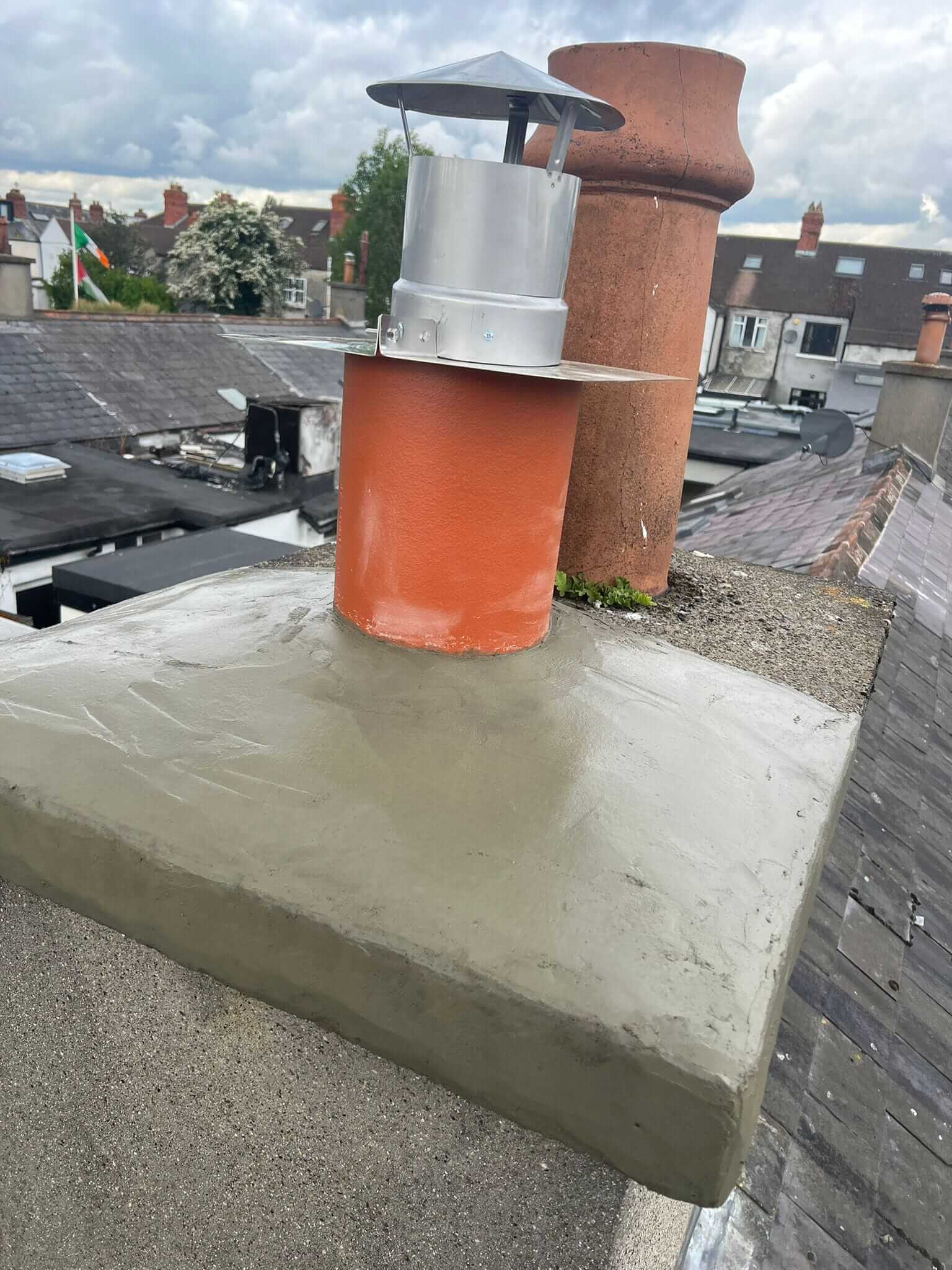
The Roof's Highest, Most Exposed, Most Ignored Part
Every other part of your roof has something protecting it. The chimney doesn't — it stands up above the ridge line, takes the wind and rain first, and gets checked last, usually only when something's already gone wrong.
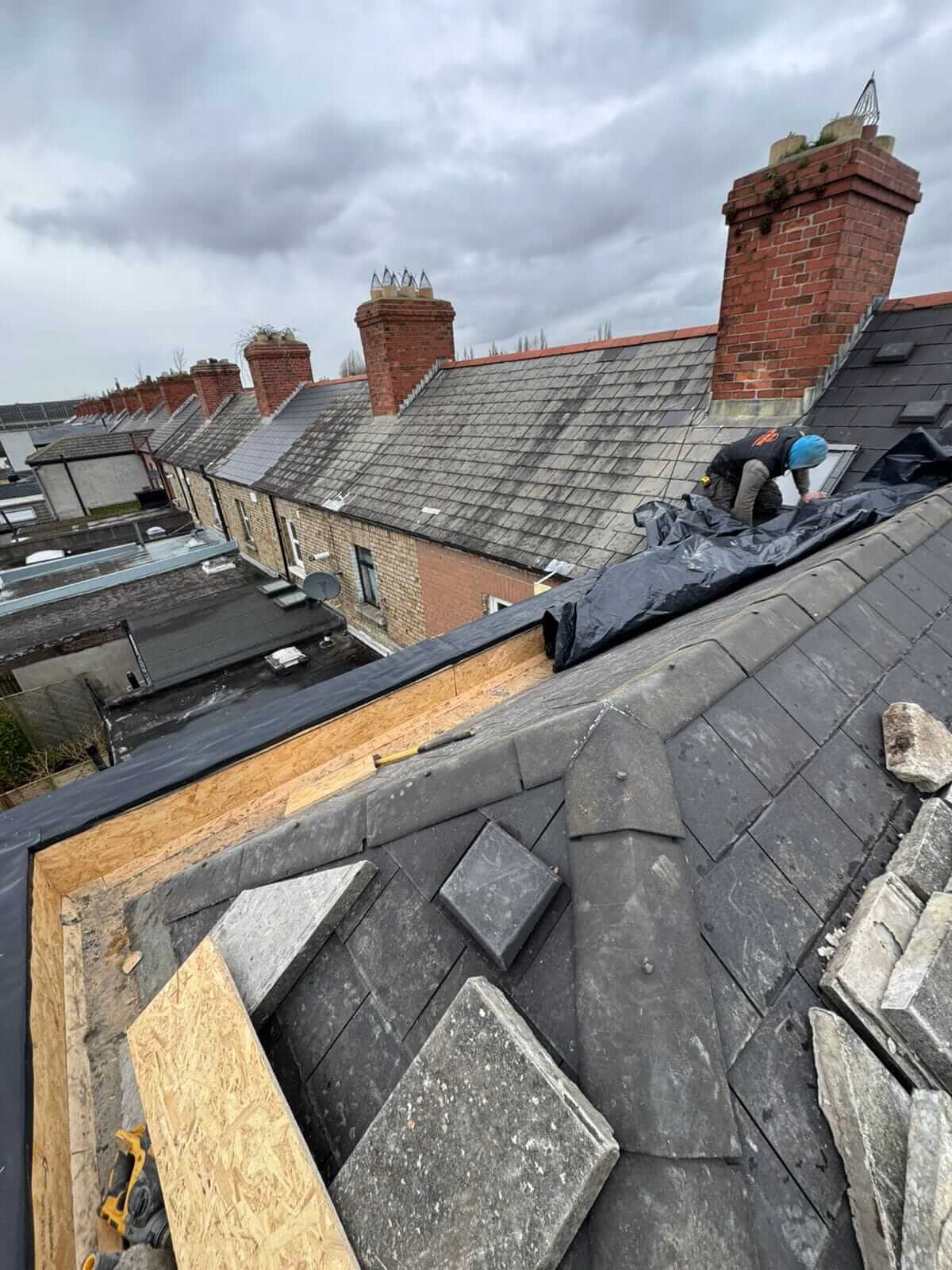
Dublin makes this worse than most cities. A huge share of the housing stock — the terraces of Rathmines, Phibsborough, Ranelagh, Drumcondra — has original Georgian or Victorian brick chimney stacks, often carrying two, three, even four flue pots on the one stack, sometimes shared across a party wall between two houses. That's over a century of frost, rain, and settling brickwork on structures that were never built with modern materials in mind — which matters more than most repair companies let on.
Mr Roofing handles the full range of chimney work — repointing, flashing, flaunching, pot replacement, cracked or leaning stacks, full rebuilds. Free inspection, 25-year guarantee, and we'll always tell you honestly whether you need a repair or a rebuild, not just quote the bigger job because it's the bigger job.
5 Star Rated For Chimney Repairs
Had Mr Roofing replace our roof after storm damage last winter. Brilliant service from start to finish — fair price, tidy team, and excellent workmanship. Highly recommended

Called them out for a chimney repair that two other roofers had ignored. They spotted the problem straight away, explained everything clearly, and had it sorted within a few days.
Got our fascias, soffits and guttering replaced, the difference is incredible. Turned up on time and the finish is perfect. Will definitely be using Mr Roofing again.
What We Actually Do
Repointing
Cracked or crumbling mortar between the bricks, redone properly — with the right mortar mix for the age of the chimney, not just whatever's on the van (more on why that matters below).
Flashing Repairs
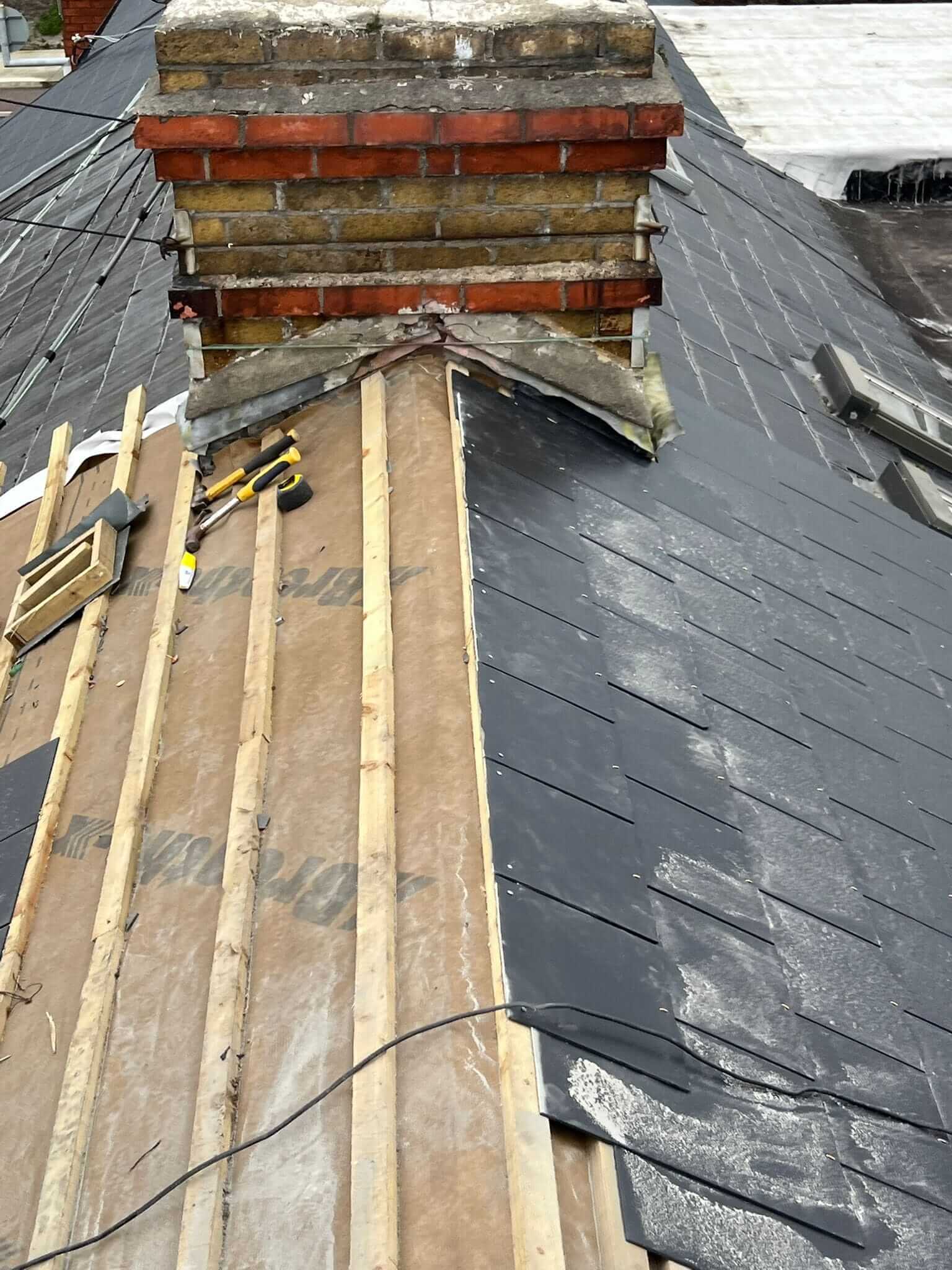
The lead seal where the chimney meets the roof — the single most common source of a "chimney leak" that isn't actually the chimney at all.
Flaunching
The mortar collar around the base of the flue pots, keeping rain from running straight down inside the flue. Cracked flaunching is one of the most overlooked, easiest-to-miss chimney problems there is.
Pot Replacement
Cracked, chipped, or missing chimney pots — replaced and matched to the stack, no odd one out standing above your roofline.
Chimney Stack Repairs
Leaning, bulging, or cracked stacks assessed properly before anything's touched — because a chimney that's structurally moving needs a different answer than one that just needs repointing.
Full Rebuilds
Where a stack's too far gone to save safely, we rebuild it to match the original — same brick pattern, same profile, same number of pots.
What Chimney Repairs Cost
Every chimney's different, and access is often the biggest factor — a stack on a two-storey semi is a different job to one on a three-storey terrace needing scaffolding just to reach it safely.
Repointing and flaunching repairs — usually the most straightforward job, priced on how much of the stack needs doing and what access is required.
Flashing replacement — depends on how much lead needs replacing and the condition of what's underneath it.
Pot replacement — generally quick, priced per pot plus access.
Full or partial rebuilds — driven by how much of the stack needs coming down and rebuilding, and matching the existing brick and profile.
Free inspection. Itemised quote. No guessing over the phone — anyone who quotes chimney work without seeing it first is quoting blind.

Why Dublin Chimneys Actually Fail
Cement repointing on a lime-mortar chimney does more harm than good.
This is the one nobody tells you. Most chimneys built before the 1920s — which is most of Dublin's period housing stock — were built with lime mortar, not cement. Lime mortar is slightly flexible and lets moisture pass through and evaporate out. Modern cement mortar doesn't do either of those things.
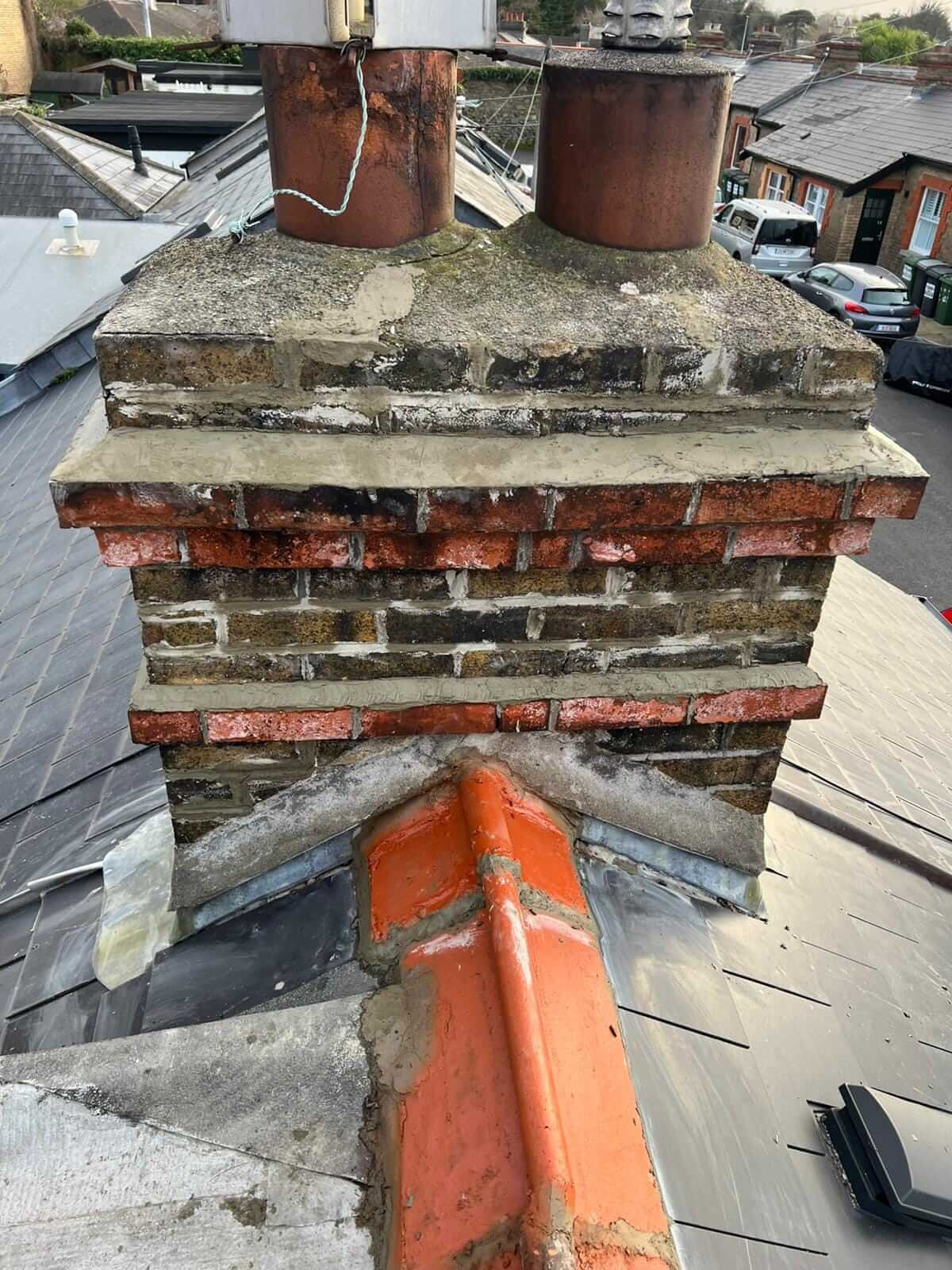
When a chimney gets repointed with cement because it's cheaper and faster, the mortar traps moisture inside the brick instead of letting it breathe — and the brick itself, being softer than the cement around it, starts to crumble and spall from the inside out. You end up with a chimney that looks freshly repointed and is actually failing faster than before the "repair." We match mortar to the age and type of the chimney, not just to whatever's quickest.
Flaunching cracks quietly, and nobody looks up to check it.
The flaunching around the base of your pots is doing more work than it gets credit for — it's the seal stopping rain running straight down inside the flue. It cracks with age and weather movement, and because it's small and at the very top of the chimney, it's the last thing anyone thinks to check. A cracked flaunch left alone for a couple of winters can mean water sitting inside the flue itself, which is a much bigger problem than the flaunch ever was.
Shared party-wall chimneys mean shared problems.
A lot of Dublin terraces have a single chimney stack straddling the party wall between two houses, each side with its own flue and pot. If your neighbour's flashing or flaunching has failed, water can track through the shared stack and show up as damp on your side — even though nothing's technically wrong with your half. This is a genuinely common, genuinely confusing situation, and it's worth knowing about before you start looking for a leak that isn't where you think it is.
A leaning stack isn't automatically a rebuild — but it needs a real look, not a guess.
Chimneys can lean slightly over decades without being dangerous, and they can also lean because the mortar's failed structurally and it needs to come down before it falls. Telling the difference from the ground is genuinely not possible — this is exactly the kind of call that needs someone up there, not someone squinting from the garden.
Chimney Repairs Frequently Asked Questions
Is a cracked chimney dangerous?
It can be. A structurally cracked or leaning stack is a genuine safety risk — not just to you, but to anyone below if masonry comes loose. If you're not sure how serious it is, that's exactly what a free inspection is for.
Do you repoint using lime mortar or cement?
Whichever is right for the chimney. Original brick chimneys, particularly anything pre-1920s, are almost always lime mortar, and we match that rather than defaulting to cement — which causes more problems than it solves on an older stack.
My neighbour and I share a chimney stack — who's responsible for repairs?
This depends on the property and can get complicated with party-wall chimneys. We can inspect and tell you clearly what's actually happening structurally, which is usually the first step regardless of how the cost gets split.
How do I know if I need repointing or a full rebuild?
Repointing fixes mortar joints on a structurally sound stack. A rebuild is needed when the bricks themselves are failing or the stack is structurally unstable. We'll tell you which one you actually need after a proper inspection — not which one we'd rather sell you.
Is chimney work covered by your guarantee?
Yes — every chimney repair or rebuild we carry out is backed by our 25-year written guarantee, same as the rest of our roofing work.
Any Questions?
Ask Us
More Services We Offer Near You